Advanced Achalasia Cardia Treatment
Expert surgical intervention to restore normal swallowing function and eliminate severe regurgitation.
Understanding Achalasia
Achalasia cardia is a rare disorder that makes it difficult for food and liquid to pass from the swallowing tube (esophagus) into your stomach.
This occurs due to nerve damage in the esophagus, causing the lower esophageal sphincter to fail to open during swallowing, resulting in food backing up.

Common Causes & Risk Factors
Several factors contribute to this condition. Understanding these risks can aid in prevention and management.
Nerve Degeneration
The underlying network of vital nerves coordinating the esophagus mysteriously degenerates over time.
Autoimmune Attack
Scientists hypothesize the body's immune system may inexplicably target and destroy esophageal nerve bundles.
Viral Infections
Some severe viral infections are theorized to be the initial catalyst for the destructive autoimmune response.
Genetic Factors
Though exceptionally rare, familial clusters suggest a deeply inherited genetic vulnerability.
Identifying the Symptoms
Difficulty Swallowing
A frightening feeling like solid food or even liquid is firmly stuck in your mid-chest.
Regurgitation
Effortlessly bringing up completely undigested food or thick saliva, often while trying to sleep.
Severe Chest Pain
Intense, crushing discomfort in the chest often profoundly mimicking an active heart attack.
Rapid Weight Loss
Dangerous, unintentional shedding of extreme weight due to a sheer inability to eat.
Diagnosis Process
To definitively diagnose Achalasia and rule out other causes, our clinic utilizes comprehensive testing.
Physical Examination
Esophageal Manometry objectively measures the exact strength and coordination of your swallowing muscles.
Imaging Tests
A Barium Swallow X-ray vividly shows the classic 'bird's beak' narrowing at the lower stomach sphincter.
Laboratory Analysis
An Upper Endoscopy decisively rules out cancer or mechanical blockages causing identical symptoms.
Our Advanced Treatments
Heller Myotomy
A highly precise laparoscopic procedure permanently cutting the tightly spasming muscle to allow easy food passage.
POEM Procedure
Per-Oral Endoscopic Myotomy perfectly cuts the sphincter from the inside using an endoscope without external incisions.
Experience
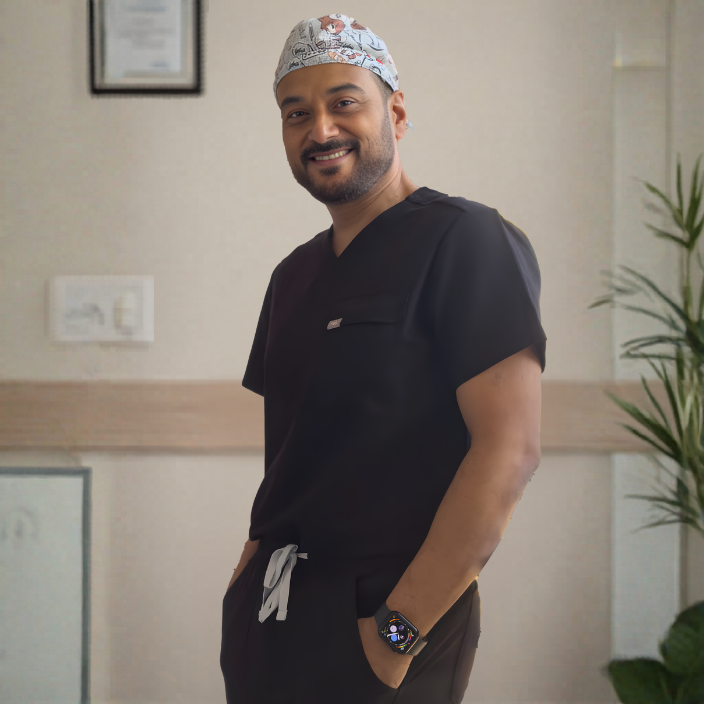
Why Choose Dr. Aloy Mukherjee?
Dr. Aloy Mukherjee is an internationally renowned Senior Consultant Surgeon with an exceptional track record of over 25 years. Specializing in Advanced Minimal Access Surgery, he is a pioneer in Laparoscopic, Bariatric, and Gastrointestinal procedures in India.
His comprehensive approach integrates multidisciplinary expertise to ensure the best possible outcomes, prioritizing rapid recovery and minimal discomfort for every patient.
Read MorePatient Testimonials
Frequently Asked Questions
What is Heller Myotomy?
It is the gold standard surgical treatment for Achalasia. The surgeon cuts the tight muscle fibers at the lower esophageal sphincter, allowing food and liquids to pass into the stomach easily.
How is it performed?
Dr. Aloy performs this laparoscopically or robotically, requiring only small keyhole incisions. A partial fundoplication is often added to prevent post-surgery acid reflux.
What is the success rate?
Laparoscopic Heller Myotomy has an extraordinarily high success rate, providing long-term relief from swallowing difficulties in over 90% of patients.
What is the recovery time?
Patients typically spend one to two nights in the hospital. You will be on a liquid or soft diet initially, but most can return to work within 1 to 2 weeks.
Is there an alternative to surgery?
Botox injections or pneumatic dilation are options, but they are temporary fixes with higher recurrence rates. Surgery offers the best definitive, durable chemical-free cure.
Will I experience acid reflux afterwards?
By combining the Heller myotomy with a partial wrap of the stomach (Dor or Toupet fundoplication), the risk of developing severe postoperative acid reflux is minimized.
Book Your Appointment
Get expert surgical care. Fill out the form below and we'll get back to you promptly.
Visit Our Clinic
Address
2nd floor, Indraprastha Apollo Hospital, Room No. 1265,
Gate No. 10, Jasola Vihar, New Delhi, Delhi 110076
Contact Information
Phone
+91 9810532834
contact@draloymukherjee.com
Timings
Monday- Saturday: 08:00 AM- 08:00 PM
Sunday: Closed
Emergency: 24/7 Available