Advanced Myasthenia Gravis Surgery
Pioneering VATS and robotic thymectomy to improve symptoms and reduce medication dependency in Myasthenia Gravis patients.
Understanding Thymectomy
A thymectomy is the surgical removal of the thymus gland, an organ located in the upper chest.
For patients with Myasthenia Gravis (an autoimmune neuromuscular disease), removing the thymus gland can dramatically reduce symptoms, induce remission, and eliminate the need for high-dose immunosuppressive drugs.

Common Causes & Risk Factors
Several factors contribute to this condition. Understanding these risks can aid in prevention and management.
Autoimmune Dysfunction
The immune system incorrectly produces antibodies that block or destroy muscle receptor sites.
Thymus Gland Abnormalities
The thymus gland often remains abnormally large and active in MG patients, driving antibody production.
Thymomas
Actual tumors of the thymus gland, observed in 10-15% of Myasthenia Gravis patients.
Genetic Factors
While not directly inherited, certain genetic immune predispositions greatly increase susceptibility.
Identifying the Symptoms
Muscle Weakness
Weakness in voluntary muscles that reliably worsens with activity and improves with rest.
Drooping Eyelids
One or both eyelids drooping significantly (ptosis), often the very first noticeable symptom.
Double Vision
Experiencing profoundly blurred or double vision that entirely resolves when one eye is closed.
Difficulty Swallowing
Choking easily and experiencing profound exhaustion simply from chewing a normal meal.
Diagnosis Process
To definitively diagnose Thymectomy and rule out other causes, our clinic utilizes comprehensive testing.
Physical Examination
A detailed neurological exam testing reflexes, muscle strength, and eye movements.
Imaging Tests
A chest CT scan explicitly checks for an enlarged thymus or the presence of a thymoma tumor.
Laboratory Analysis
The 'Tensilon' test and advanced blood assays detect specific anti-AChR or anti-MuSK antibodies.
Our Advanced Treatments
VATS Thymectomy
Video-Assisted Thoracoscopic Surgery, using 3 tiny incisions on the side of the chest to entirely remove the thymus gland.
Robotic Thymectomy
Utilizing highly advanced robotics for unparalleled 3D precision in dissecting the thymus away from the heart's major blood vessels.
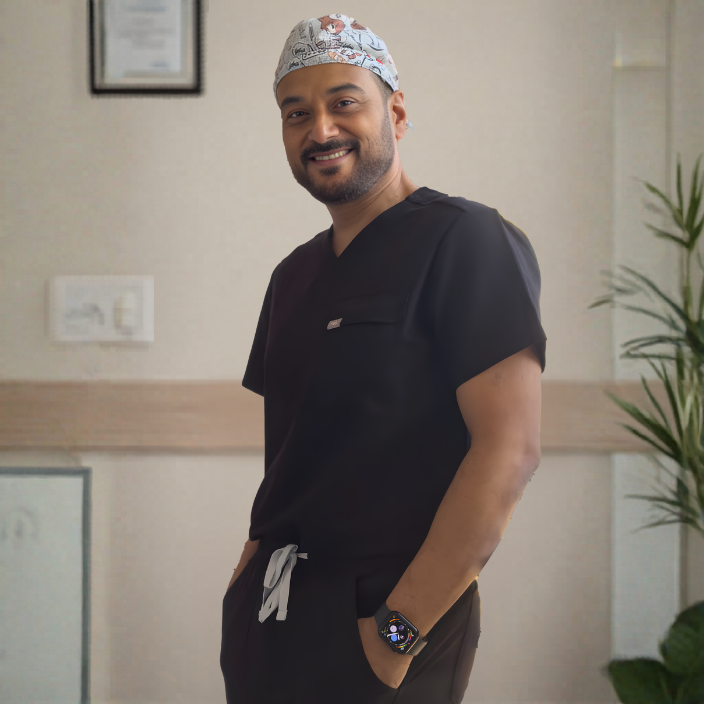
Experience
Why Choose Dr. Aloy Mukherjee?
Dr. Aloy Mukherjee is an internationally renowned Senior Consultant Surgeon with an exceptional track record of over 25 years. Specializing in Advanced Minimal Access Surgery, he is a pioneer in Laparoscopic, Bariatric, and Gastrointestinal procedures in India.
His comprehensive approach integrates multidisciplinary expertise to ensure the best possible outcomes, prioritizing rapid recovery and minimal discomfort for every patient.
Read MorePatient Testimonials
Frequently Asked Questions
Why is the thymus gland removed for Myasthenia Gravis?
The thymus gland often plays a role in producing the antibodies that disrupt nerve-muscle communication in MG. Removing it can significantly improve or even cure the symptoms.
What is VATS or Robotic Thymectomy?
It is a minimally invasive approach using small incisions between the ribs (Video-Assisted Thoracoscopic Surgery) or a surgical robot, completely avoiding the need to split the breastbone (sternotomy).
Will surgery cure my Myasthenia Gravis?
While not a guaranteed cure, over 70% of patients experience significant improvement in symptoms, and a large percentage achieve complete drug-free remission over time.
How long does it take to see improvements?
Improvement is not always immediate. It can take several months to a few years for the circulating antibodies to decrease and for the full benefits of the thymectomy to be realized.
What is the recovery like after a minimally invasive thymectomy?
Patients usually stay in the hospital for 2 to 3 days and return to light activities in 2 weeks, avoiding the painful sternotomy recovery that takes months.
Will my regular medications change right away?
Your neurologist will tightly manage your medications before and after surgery. You will likely continue them initially, tapering off slowly as your symptoms improve.
Book Your Appointment
Get expert surgical care. Fill out the form below and we'll get back to you promptly.
Visit Our Clinic
Address
2nd floor, Indraprastha Apollo Hospital, Room No. 1265,
Gate No. 10, Jasola Vihar, New Delhi, Delhi 110076
Contact Information
Phone
+91 9810532834
contact@draloymukherjee.com
Timings
Monday- Saturday: 08:00 AM- 08:00 PM
Sunday: Closed
Emergency: 24/7 Available