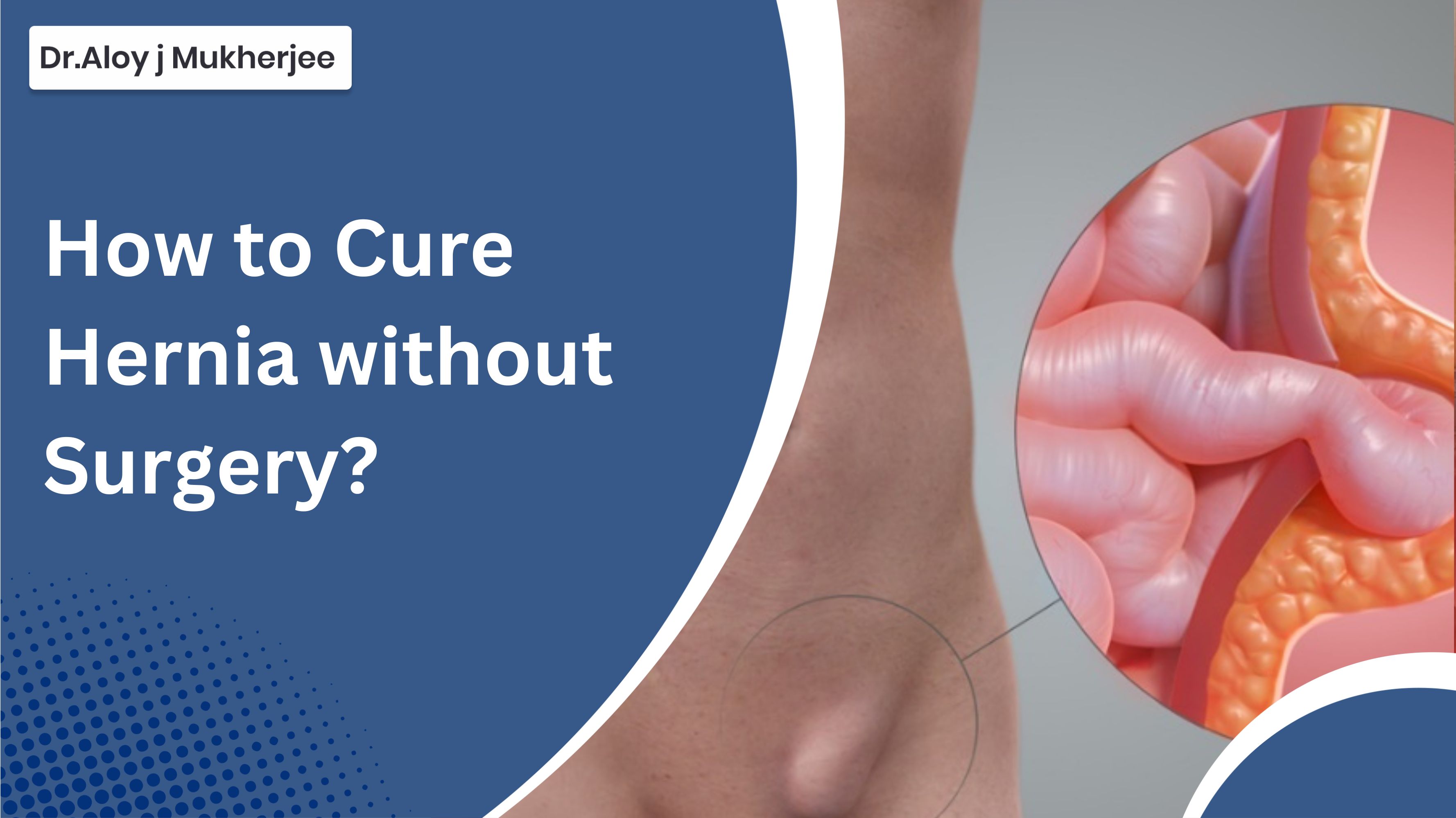
If you are searching for how to cure hernia without surgery, the clear answer is: a hernia cannot be permanently cured without surgery, but certain non-surgical methods can help manage symptoms, slow progression, and improve comfort. In the first 50 words, it is important to understand that while lifestyle changes, diet, and supportive measures ease discomfort, they do not repair the abdominal wall defect causing the hernia.
Many people still explore how to cure hernia without surgery because they fear surgery, want temporary relief, or have a small hernia diagnosed early. This detailed guide explains what truly works, what doesn’t, when non-surgical management is possible, and how to make safe decisions for long-term health.
If you need personalised guidance, consulting an experienced professional such as Dr. Aloy Mukherjee, a leading Hernia Surgeon in Delhi, can help you choose the best treatment path.
Understanding Hernia
A hernia occurs when an internal organ or tissue pushes through a weak spot in the abdominal wall. Since this involves a structural defect, understanding how to cure hernia without surgery requires knowing the limitations of non-invasive methods.
Why Hernias Don’t Heal On Their Own
The muscle or tissue tear does not close naturally in adults.
Over time, the opening may increase in size.
Even if pain is minimal, pressure from coughing, lifting, or weight gain can worsen it.
Common Types of Hernia
Hernias can occur in different parts of the body depending on where the muscle wall becomes weak. Understanding the type of hernia you have is important when exploring how to cure hernia without surgery or manage symptoms safely.
1. Inguinal Hernia
This is the most common type of hernia and occurs when a portion of the intestine pushes through a weak spot in the lower abdominal wall, usually in the groin.
It is far more common in men due to natural anatomical openings in the inguinal canal. People often notice a bulge that becomes more obvious when standing, coughing, or lifting heavy objects.
2. Umbilical Hernia
An umbilical hernia appears around the belly button (navel area).
While very common in infants and may close naturally in early childhood, in adults it usually occurs due to obesity, pregnancy, or repeated abdominal strain. In adults, this type rarely heals on its own, making management essential.
3. Hiatal Hernia
A hiatal hernia occurs when the upper part of the stomach pushes through the diaphragm into the chest cavity.
This type does not create a visible external bulge. Instead, it causes internal symptoms like acidity, heartburn, chest discomfort, and difficulty swallowing.
4. Ventral Hernia
A ventral hernia develops in the front abdominal wall and may appear anywhere between the chest and the pelvis.
It often becomes more noticeable when straining or standing. Weak abdominal muscles, previous surgeries, and heavy lifting can trigger or worsen this condition.
5. Incisional Hernia
An incisional hernia forms at the site of a previous surgical incision.
Because the surgical wound weakens the abdominal wall, internal tissues may bulge out months or even years after the original operation. Lack of proper healing, infection, or obesity can increase the risk.
6. Femoral Hernia
Femoral hernias occur slightly below the groin area, where the femoral artery and vein pass from the abdomen into the thigh.
These are more common in women and can sometimes go unnoticed until they cause pain. Femoral hernias carry a higher risk of complications because the opening is tight, making strangulation more likely.
Can Hernia Be Managed Without Surgery?
Many people ask can hernia be cured without surgery, especially when symptoms are mild.
When Non-Surgical Management Is Possible
A watchful waiting approach is often considered when:
The hernia is small
There is no severe pain
The hernia is reducible (can be pushed back)
Patient has health issues that delay surgery
Lifestyle modifications can relieve pressure
However, even in these situations, hernia can cure without surgery is rarely realistic. Non-surgical care manages, not cures.
Lifestyle & Diet Measures That Help Hernia Symptoms
Although these methods are not a cure, they significantly support comfort for those exploring how to cure hernia without surgery.
1. Weight Management
Excess belly fat increases abdominal pressure, worsening the hernia.
Benefits:Reduces strain on weak abdominal muscles
Minimizes hernia bulge expansion
Supports long-term comfort
Weight reduction is an essential part of hernia cure without surgery strategies.
2. Hernia-Friendly Diet
Foods to Include
High-fiber fruits (apples, pears, bananas)
Leafy greens
Oats and whole grains
Lentils and legumes
Water-rich vegetables
Foods to Avoid
Spicy food
Fried foods
Acidic dishes (especially for hiatal hernia)
Excess caffeine
Carbonated drinks
Diet will not provide a complete hernia cure without surgery, but it helps avoid constipation, which prevents hernia worsening.
3. Avoid Heavy Lifting & Straining
Heavy lifting increases intra-abdominal pressure and aggravates hernias.
Preventive measures that support how to cure hernia without surgery include:Avoiding gym workouts that involve heavy weights
Using correct posture
Preventing constipation (straining worsens hernia growth)
4. Hernia Belts or Trusses
These can temporarily help by:
Supporting weak muscles
Reducing bulge visibility
Improving comfort during daily activities
However:
They do not offer a hernia cure without surgery
Long-term use may weaken muscles
Must be used only on a doctor’s recommendation
5. Strengthening & Breathing Exercises
While exercises cannot close the hernia, they can strengthen surrounding muscles.
Recommended:
Deep breathing exercises
Pelvic tilts
Light walking
Yoga poses like Cat-Cow, Bridge (only if approved by a doctor)
These exercises align with safe, supportive techniques within how to cure hernia without surgery management.
Myths vs. Facts: What Non-Surgical Methods Cannot Do
Understanding the limitations is essential before believing any claims about how to cure hernia without surgery.
Myth 1: Hernia can completely heal naturally
Fact: The opening in muscles does not close without surgical repair.
Myth 2: Belts and trusses cure hernias
Fact: They only support; they cannot repair torn tissue.
Myth 3: No pain means no problem
Fact: A painless hernia can still lead to dangerous complications.
Myth 4: Exercises can reverse hernias
Fact: Exercises strengthen nearby muscles but do not close the defect.
This is why can hernia be cured without surgery almost always leads to the medical truth: management, not cure.
When Surgery Becomes Necessary
There are clear signs when surgery becomes the only option:
Red Flags
Constant or severe pain
Increasing size of bulge
Hard, tender bulge that cannot be pushed back
Vomiting, nausea, or bowel obstruction
Fever with hernia pain
These symptoms indicate a risk of strangulation, which is a medical emergency.
Even for those exploring how to cure hernia without surgery, surgery becomes unavoidable in such situations.
When You Should NOT Delay Treatment
Seek immediate medical attention if you notice:
Severe pain
Redness over the bulge
Fever
The bulge becomes non-reducible
Loss of appetite
Nausea or vomiting
These signs indicate dangerous complications.
Conclusion
Now you understand exactly how to cure hernia without surgery in a safe and controlled manner. While these methods relieve discomfort, the hernia defect itself remains. This is why medical experts worldwide confirm that permanent repair requires surgery.
Still, non-surgical strategies are extremely beneficial for reducing symptoms and improving daily comfort. Whether you follow a healthy diet, manage weight, strengthen core muscles gently, or use a supportive belt, these measures help you live better while planning your next steps.
If you need personalised guidance, consulting an experienced professional such as Dr. Aloy Mukherjee, a leading Hernia Surgeon in Delhi, can help you choose the best treatment path.
Frequently Asked Questions
1. Can hernia be cured without surgery?
No, the structural defect cannot close naturally. Non-surgical methods only manage discomfort.
2. What is the best way to to cure hernia without surgery?
Lifestyle changes, weight control, diet, and supportive measures help, but none provide a true cure.
3. Does a small hernia need surgery?
Not always. Small, asymptomatic hernias may be monitored under medical supervision.
4. Can exercises heal a hernia?
Exercises strengthen muscles but do not repair the torn tissue.
5. Is hernia belt effective?
It provides support but cannot cure hernia.
6. Does weight loss help hernias?
Yes, reducing abdominal pressure helps relieve symptoms.
7. Can avoiding surgery be dangerous?
Yes. Delaying surgery too long can lead to strangulation, requiring emergency intervention.
8. What is the safest long-term treatment?
Surgery is the only permanent, safe, and effective cure.